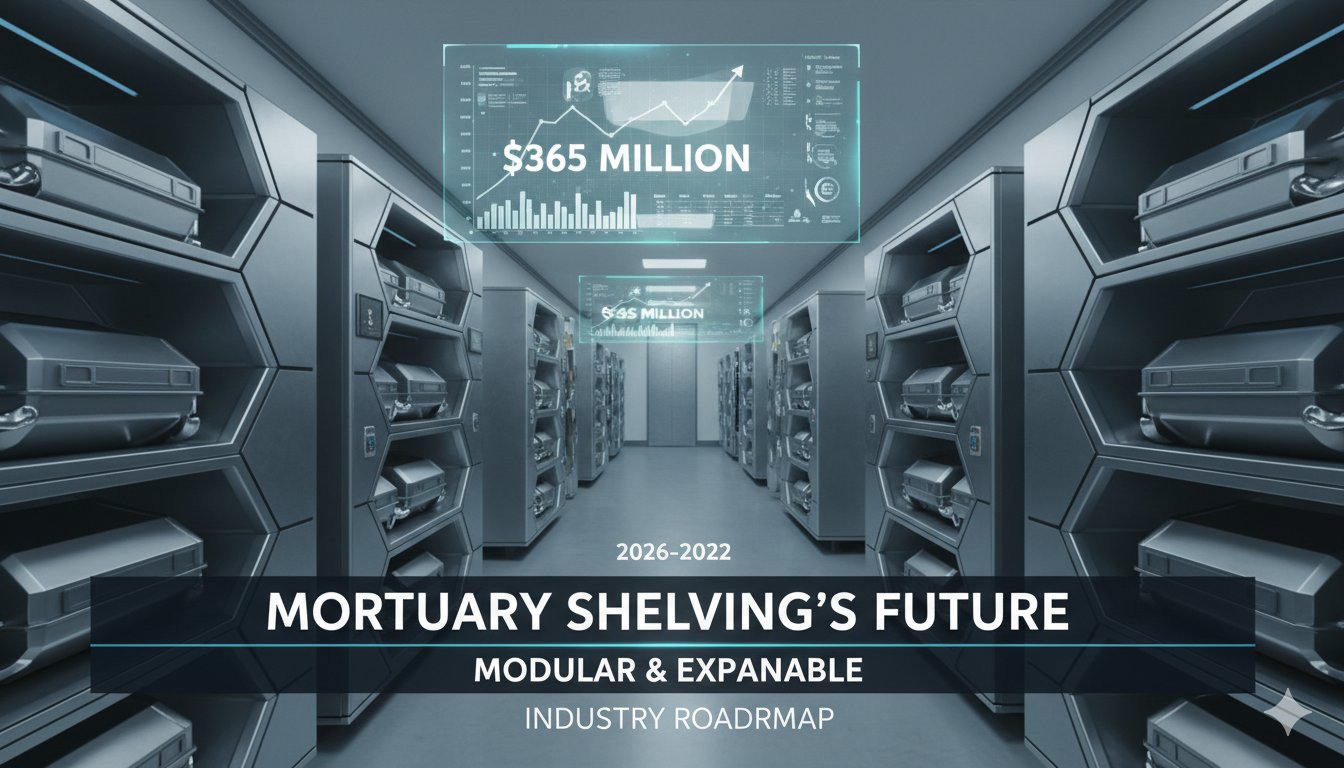
“The global mortuary shelving units market, valued at $221 million in 2026, is forecasted to reach $365 million by 2032, achieving a CAGR of nearly 9%. Key growth stems from heightened needs for hygienic, space-efficient storage in hospitals, morgues, and forensic labs, with modular and expandable designs dominating trends to enhance scalability and disaster preparedness amid regulatory pressures and facility modernizations.”
Market Projections and Segmentation
The market’s trajectory reflects robust expansion fueled by demographic shifts and infrastructure demands in the deathcare sector. Starting from a base of $200 million in the prior year, the industry has already notched $221 million this year, setting the stage for steady compounding growth.
| Year | Market Size (USD Million) | YoY Growth (%) |
|---|---|---|
| 2026 | 221 | 10.3 |
| 2027 | 241 | 9.0 |
| 2028 | 263 | 9.1 |
| 2029 | 287 | 9.1 |
| 2030 | 313 | 9.1 |
| 2031 | 341 | 9.0 |
| 2032 | 365 | 7.0 |
Segmentation reveals diverse preferences across product types, materials, and end-users, with U.S. buyers favoring high-end configurations to comply with stringent health codes.
By Product Type : Multi-tier shelving captures the largest share at 35%, ideal for high-volume morgues, while mobile shelving grows fastest at 11% CAGR, enabling quick reconfigurations in space-constrained urban facilities. Double-tier and single-tier options hold steady for smaller operations.
By Material : Stainless steel dominates with 45% market share, prized for corrosion resistance and ease of sanitation, followed by aluminum at 30% for lightweight mobility. Galvanized steel appeals to budget-conscious segments, comprising 25%.
By End-User : Hospitals and clinics account for 40%, driven by autopsy and storage needs, while morgues and funeral homes represent 35%. Forensic labs and research institutions make up the balance, emphasizing customizable units.
Regional Focus : North America leads with 38% of global share, where the U.S. market alone is projected to hit $140 million by 2032, bolstered by investments in healthcare expansions and forensic advancements.
Key Growth Drivers and Opportunities
Rising cadaver volumes from aging populations and public health events propel demand for optimized storage, with U.S. facilities prioritizing units that integrate seamlessly with cold storage systems. Regulatory emphasis on infection control and chain-of-custody integrity further accelerates adoption of advanced features like antimicrobial coatings and ergonomic designs to reduce staff strain.
Opportunities abound in modular architectures, allowing facilities to scale without major overhauls—expandable systems can increase capacity by up to 50% in existing footprints. Integration of digital tools, such as sensors for real-time monitoring of environmental conditions, opens avenues for tech-savvy providers to differentiate in competitive bids.
Cost dynamics present hurdles, including raw material fluctuations from trade policies, but shifts toward domestic sourcing in the U.S. mitigate risks, fostering supply chain resilience.
Trends Shaping the Industry
Modular and expandable shelving emerges as the pivotal trend, transforming static storage into dynamic ecosystems. These solutions facilitate rapid adaptations for surge scenarios, like mass casualty events, while hybrid materials blend strength with portability to meet diverse operational needs.
Automation touches, including roller mechanisms and adjustable heights, streamline workflows in high-throughput environments, cutting labor costs by an estimated 20%. Sustainability gains traction, with recyclable materials and energy-efficient designs aligning with ESG mandates in U.S. corporate procurements.
Competitive Landscape
Major players vie for dominance through innovation and strategic partnerships. Firms specializing in stainless steel and aluminum units lead, offering tailored portfolios from basic racks to IoT-enabled systems. Market concentration remains moderate, with top vendors holding 50% share, leaving room for niche entrants focused on bariatric or high-density applications.
U.S.-based manufacturers benefit from proximity to key buyers, emphasizing compliance with federal standards to secure contracts in government hospitals and forensic networks.
Disclaimer: This news report is for informational purposes only and does not constitute investment advice or tips. Sources are aggregated from industry analyses.