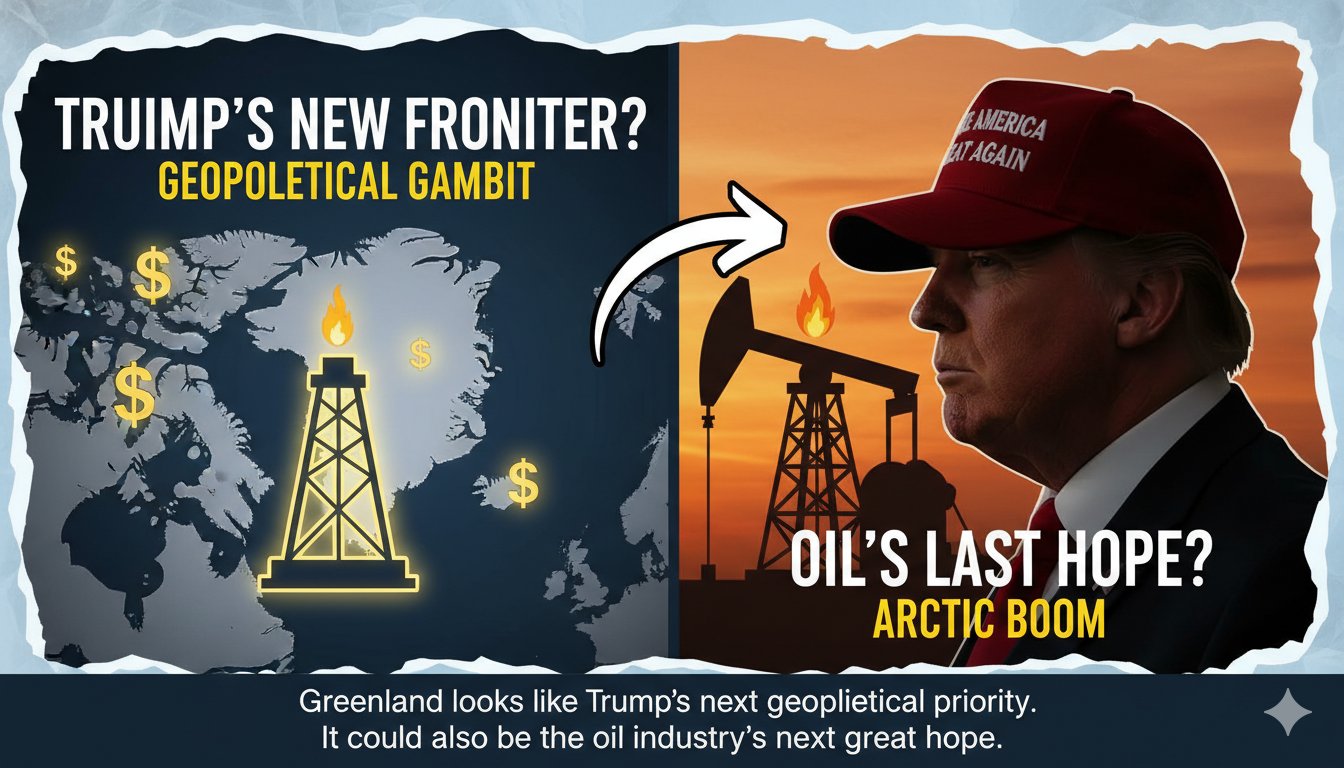
“President Trump’s renewed push for U.S. control over Greenland highlights its role in countering Arctic rivals like Russia and China, while vast untapped oil reserves position the island as a lucrative opportunity for energy firms amid rising global demand.”
President Trump’s administration has intensified efforts to secure Greenland, framing it as essential for U.S. national security in the thawing Arctic. With Russian and Chinese vessels increasingly active in nearby waters, the island’s position offers unparalleled monitoring capabilities over northern shipping routes and potential military threats. The U.S. already operates key installations there, but full integration would expand influence, potentially reshaping alliances and deterring adversarial expansions.
Geopolitically, this move aligns with broader U.S. strategies to fortify the Western Hemisphere. Denmark, Greenland’s current overseer, faces mounting pressure, though negotiations emphasize mutual benefits like economic investments. Trump’s team has floated substantial financial incentives, including direct payments to Greenland’s residents, estimated at up to $100,000 per person for the 57,000-strong population, totaling around $5.7 billion. This approach aims to foster local support while addressing the island’s economic challenges, such as limited infrastructure and high living costs.
Economic Stakes in the Arctic
Greenland’s appeal extends beyond defense, rooted in its abundant natural resources. Rare earth minerals, critical for electronics and defense tech, abound here, with deposits rivaling global leaders. But the real draw for investors lies in hydrocarbons. U.S. geological surveys estimate the Arctic region holds up to 90 billion barrels of undiscovered oil and 1,700 trillion cubic feet of natural gas, much of it potentially under Greenlandic territory.
Recent developments underscore this potential. A Texas-based energy firm is advancing plans for exploratory drilling in the Jameson Land Basin, with operations slated for mid-2026. Backed by a $60 million investment, the project targets onshore reserves, navigating around Greenland’s 2021 ban on new offshore licenses. Analysts project that successful extraction could yield billions in revenue, bolstering U.S. energy independence and reducing reliance on volatile Middle Eastern supplies.
| Region | Estimated Undiscovered Oil (Billion Barrels) | Estimated Natural Gas (Trillion Cubic Feet) |
|---|---|---|
| West Greenland-East Canada | 7.8 | 148 |
| Northeast Greenland | 31.4 | 1,100 |
| Arctic Circle Overall | 90 | 1,700 |
These figures highlight Greenland’s role in future energy markets, especially as global demand surges with electric vehicle adoption and industrial growth. Oil prices, hovering around $75 per barrel amid OPEC adjustments, could spike if new supplies enter the market, benefiting U.S. firms positioned to capitalize.
Investment Opportunities and Risks
For the oil industry, Greenland represents a high-reward frontier. Companies like March GL are securing stakes, with agreements allowing up to 70% interest in licensed areas. Onshore drilling minimizes environmental scrutiny compared to offshore ventures, though climate concerns persist. Melting ice caps are opening access, but they also raise operational hazards like unstable terrain and extreme weather.
U.S. policy shifts under Trump could accelerate permits and subsidies, drawing majors like ExxonMobil or Chevron. Equity markets reflect optimism: shares in Arctic-focused explorers have risen 15-20% since renewed talks, signaling investor confidence in geopolitical resolutions. However, risks abound—local opposition, Danish resistance, and international backlash could delay projects, inflating costs estimated at billions over decades.
Strategic Implications for U.S. Energy Security
Acquiring influence over Greenland would diversify U.S. energy portfolios, countering China’s dominance in rare earths and Russia’s gas leverage. It could lower domestic fuel costs, stimulating manufacturing and exports. Trump’s vision includes integrating Greenland into broader economic pacts, potentially creating jobs and infrastructure booms on the island while enhancing U.S. bargaining power in global trade.
Yet, the push tests alliances. NATO partners worry about fractures, but proponents argue it strengthens collective defense against non-Western incursions. For American investors, the equation is clear: Greenland’s resources could fuel the next energy renaissance, blending geopolitics with profit.
Disclaimer: This article is for informational purposes only and does not constitute financial advice, investment recommendations, or endorsements of any political actions. All data and opinions are based on publicly available information and should not be relied upon for decision-making without independent verification.