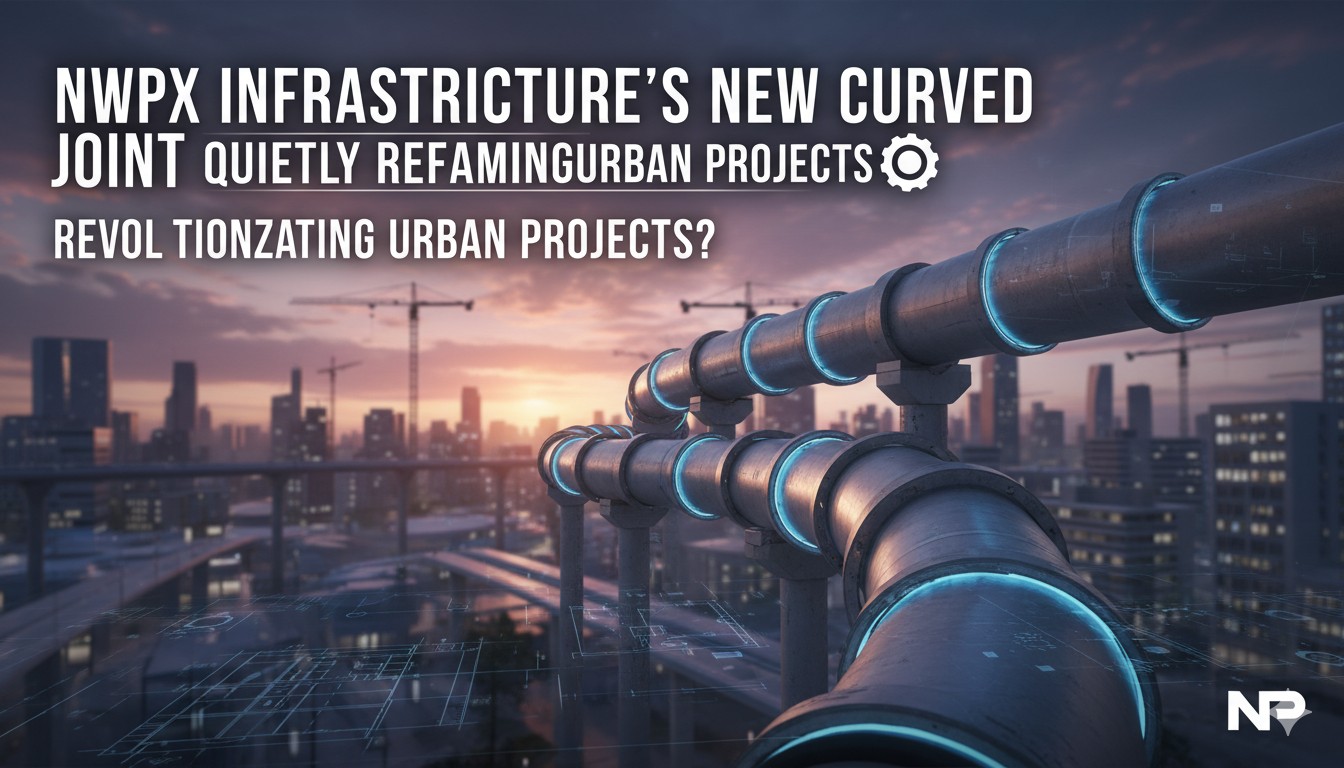
“NWPX Infrastructure has debuted its patent-pending Radial Bending Joint in a major Florida water pipeline, enabling curved trenchless installations that cut costs and minimize urban disruption. This innovation positions the company to capture more market share in densely populated areas by allowing pipelines to navigate complex city layouts with fewer construction sites.”
NWPX Infrastructure, a key player in water-related products, has rolled out its Radial Bending Joint (RBJ) technology in a significant pipeline initiative. This joint facilitates the installation of steel casing pipes along curved trajectories during microtunneling, a method that avoids extensive surface excavation. By permitting bends in the pipeline path, the RBJ reduces the necessity for multiple access shafts, shrinks the overall project footprint, and streamlines operations in restricted spaces.
The technology addresses longstanding challenges in pipeline deployment, where straight-line limitations often force additional engineering workarounds. In practice, it allows for precise alignment with existing utility corridors, avoiding the need to reroute around buildings, roads, or other infrastructure. This results in lower labor expenses, shorter timelines, and diminished environmental disturbance, such as reduced traffic interruptions and soil displacement.
Strategic Shift Toward Urban Efficiency
For NWPX, this development signals a pivot in how it approaches urban water systems. Traditionally focused on large-scale water transmission, the company is now enhancing its portfolio with tools tailored for city environments, where aging pipes and growing populations demand upgrades without halting daily life. The RBJ enables NWPX to bid more competitively on municipal contracts that prioritize minimal disruption, such as stormwater management or wastewater expansions in metropolitan areas.
Analysts note that urban projects often carry premium pricing due to their complexity, and innovations like the RBJ could boost NWPX’s win rates. The trenchless market, which includes microtunneling, is expanding rapidly as cities invest in resilient infrastructure amid climate pressures and regulatory demands for sustainable construction.
Market Context and Growth Potential
The global trenchless technology sector is on an upward trajectory, driven by urbanization and the need to replace outdated systems. Projections indicate steady expansion, with opportunities in North American cities facing water scarcity and flood risks.
| Metric | Value | Notes |
|---|---|---|
| Trenchless Market CAGR | 6.3% | From 2025 to 2031, fueled by urban density and eco-regulations |
| Projected Market Size by 2031 | $6.38 billion | Emphasis on cost-effective, low-impact methods |
| NWPX’s Role | Leading supplier | Specializes in steel pipes for water conveyance |
This positions NWPX to leverage federal funding streams for infrastructure, where efficiency gains from curved installations could differentiate it from competitors relying on conventional joints.
Financial Angles for Investors
NWPX’s stock trades at approximately $67.82, near its 52-week high, reflecting optimism around product innovations. The RBJ’s commercial rollout could drive revenue growth by opening doors to high-margin urban contracts. Quarterly earnings have shown strength in engineered solutions, with backlog increases tied to similar advancements.
Key financial highlights include:
Revenue Streams : Dominated by water pipe sales, with trenchless products contributing a growing share.
Profit Margins : Improved through efficiencies in manufacturing curved joints, potentially reducing material waste.
Valuation Metrics : Price-to-earnings ratio aligns with sector peers, but innovation could justify a premium if urban adoption accelerates.
Investors should monitor upcoming project announcements, as successful implementations could validate the RBJ’s edge in competitive bidding.
Competitive Edge in Cityscapes
In urban settings, where space constraints amplify project risks, the RBJ offers a tactical advantage. It supports longer tunneling drives with curves, enabling installations under busy intersections or alongside rail lines without extra permits. This not only accelerates completion but also aligns with city goals for green building practices, potentially earning NWPX preferred vendor status in major hubs.
Disclaimer: This is not investment advice, a financial report, or trading tips. All information is based on publicly available data without specific sources cited. Readers should conduct their own research and consult qualified professionals before making decisions.