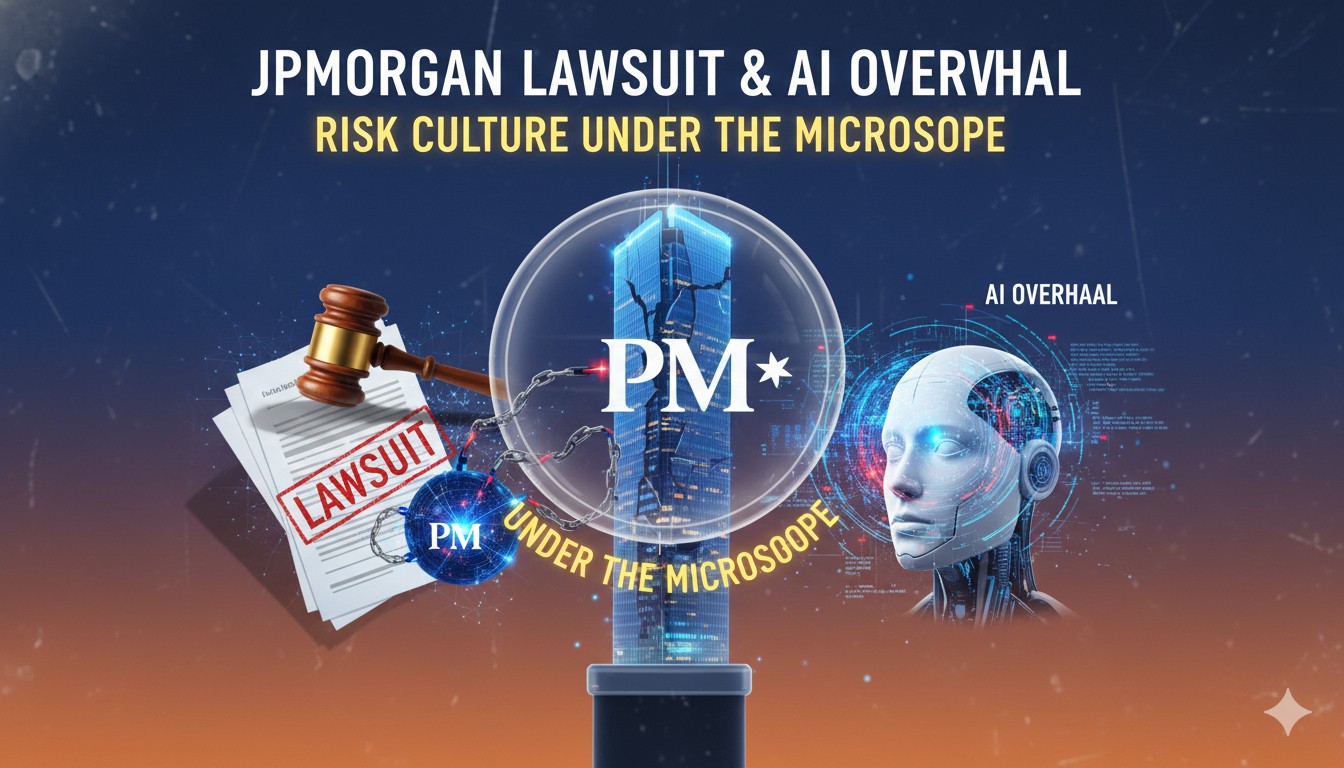
JPMorgan Chase faces heightened scrutiny as a fresh lawsuit accuses the bank of enabling fraud in securitized auto loans from bankrupt lender Tricolor Holdings, spotlighting potential lapses in due diligence and risk controls. Simultaneously, the bank’s aggressive push into AI—including widespread adoption of large language models across 150,000 employees and the replacement of external proxy advisors with an internal AI platform—raises questions about governance, ethical deployment, and the cultural readiness to manage emerging technological risks in a high-stakes financial environment. These developments converge to test the institution’s longstanding emphasis on robust risk management amid rapid innovation.
JPMorgan Chase Faces Dual Challenges in Risk Oversight
JPMorgan Chase, the largest U.S. bank by assets, is navigating parallel pressures that directly challenge its risk culture. A recent class-action-style lawsuit filed by investors in Manhattan federal court targets the bank’s role in financing and securitizing loans for Tricolor Holdings, a subprime auto lender that filed for bankruptcy. Plaintiffs, holding over $230 million in asset-backed notes issued between 2022 and 2025, allege that JPMorgan, alongside Barclays and Fifth Third, ignored clear warning signs of fraudulent practices at Tricolor. The suit claims the banks continued underwriting and marketing these securities to investors even as evidence mounted of misconduct, including inflated loan performance metrics and Ponzi-like structures that relied on new issuances to cover earlier obligations.
This litigation revives familiar concerns about securitization practices in consumer finance. Tricolor’s collapse left noteholders facing substantial losses, and the accusations center on inadequate due diligence, weak monitoring of third-party originators, and insufficient escalation of red flags within JPMorgan’s risk framework. The bank’s involvement as a major lender and underwriter to Tricolor amplifies the stakes, with critics arguing that such exposures reflect broader shortcomings in how complex financing arrangements are vetted and overseen.
At the same time, JPMorgan is accelerating its AI integration at an unprecedented scale. The bank has deployed generative AI tools internally, granting access to large language models for approximately 150,000 employees to enhance productivity in areas ranging from research and compliance to customer service. Leadership has emphasized redeployment strategies for roles potentially displaced by automation, signaling a proactive but aggressive approach to workforce transformation. Jamie Dimon has publicly downplayed fears that AI could undermine the bank’s operations, instead framing it as a tool to improve efficiency and decision-making across the organization.
A notable aspect of this overhaul involves the asset management division’s decision to phase out third-party proxy advisory firms like ISS and Glass Lewis for U.S. proxy voting. Starting with the 2026 proxy season, JPMorgan shifted to an in-house AI-powered platform known as Proxy IQ. This system aggregates data from thousands of annual shareholder meetings, incorporates internal research, and generates voting recommendations without external input. The move aligns with broader industry skepticism toward proxy advisors amid regulatory scrutiny over their influence and potential biases, particularly in ESG-related matters.
These AI initiatives demonstrate JPMorgan’s commitment to technological leadership in finance. The bank has developed proprietary platforms, including an LLM Suite for financial research and specialized tools like Connect Coach for private banking advisors. Investments in training—such as Python programming and prompt engineering—aim to foster an AI-literate workforce. However, the rapid rollout invites examination of associated risks, including algorithmic bias in decision-making, data privacy vulnerabilities, potential fiduciary breaches if AI-driven votes underperform, and the challenge of maintaining human oversight in automated processes.
The intersection of the Tricolor lawsuit and the AI transformation underscores a core tension in modern banking: balancing innovation with rigorous risk controls. The fraud allegations highlight traditional operational and credit risks, where lapses in monitoring third-party partners can lead to reputational and financial damage. Meanwhile, the AI push introduces novel governance challenges—ensuring models are transparent, auditable, and aligned with ethical standards, while preventing over-reliance on technology that could amplify errors at scale.
JPMorgan’s risk culture has long been shaped by post-crisis reforms, with heavy emphasis on independent risk functions, scenario testing, and accountability at senior levels. Yet these events test whether those frameworks are sufficiently adaptive to handle both legacy issues in securitization and frontier risks from AI deployment. Investors are watching closely for signs of how the bank integrates lessons from the lawsuit into enhanced due diligence protocols, while ensuring AI governance includes robust bias mitigation, explainability requirements, and contingency planning for system failures.
Key areas under scrutiny include:
Due Diligence Enhancements : Strengthening ongoing monitoring of securitized assets and third-party originators to detect early signs of fraud or misrepresentation.
AI Governance Framework : Expanding internal controls for model validation, ethical reviews, and escalation protocols to address emerging risks in automated decision-making.
Workforce and Cultural Adaptation : Continuing redeployment efforts and training to maintain morale and expertise amid technological change.
Regulatory Alignment : Proactively addressing potential supervisory expectations around AI usage in fiduciary roles and complex financing.
The Tricolor case and AI initiatives together place JPMorgan’s risk culture firmly in the spotlight. How the bank responds—through tightened controls, transparent governance, and sustained innovation—will influence perceptions of its resilience in an era where traditional and technological risks increasingly overlap.
Disclaimer : This is a news and analysis report based on publicly available information. It is not financial, legal, or investment advice.