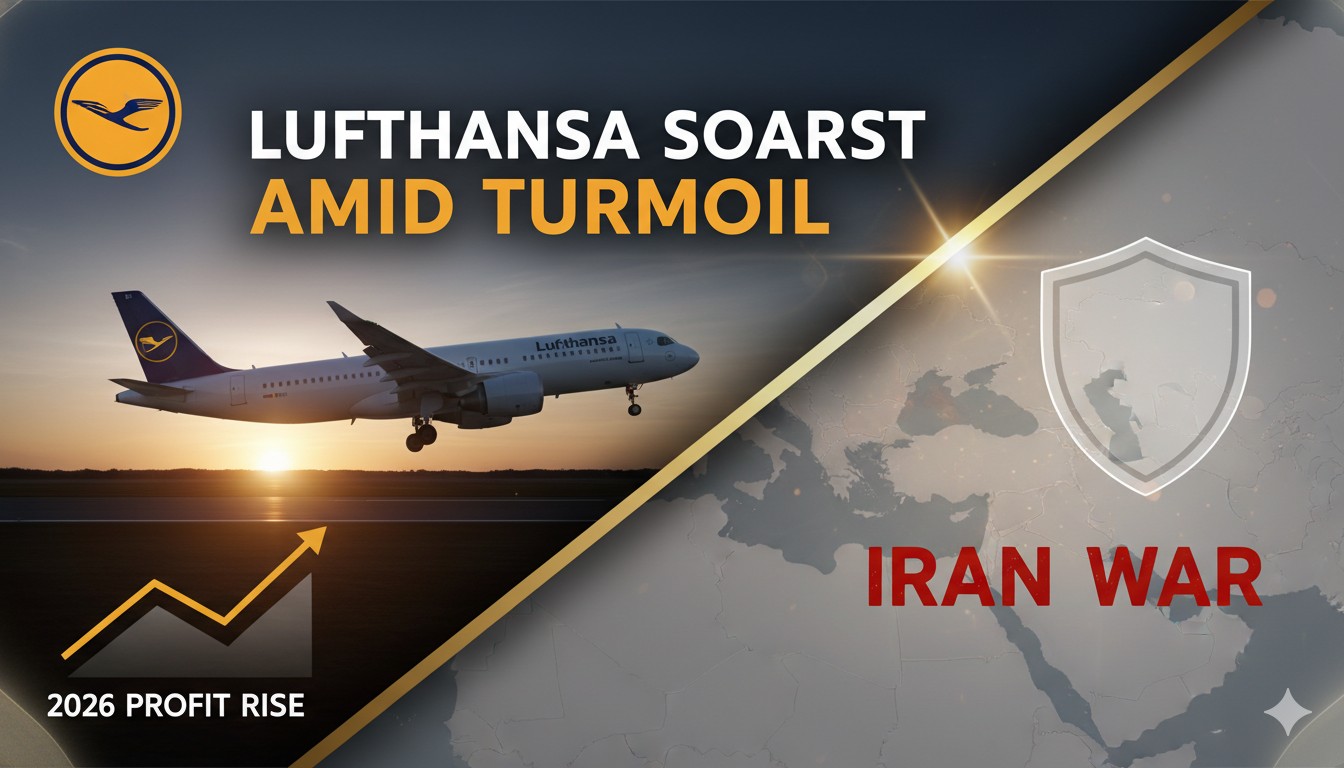
Lufthansa Group reported a strong 2025 performance with adjusted operating profit reaching approximately €2 billion, surpassing expectations through disciplined cost management, fleet modernization, and robust passenger demand. Despite this, the escalating war involving Iran introduces significant geopolitical uncertainty, including airspace closures, flight reroutings, and surging oil prices. The company projects around 4% capacity growth for 2026, alongside increases in revenue and profit margins, expecting overall operating earnings to rise significantly year-over-year, driven by internal efficiency gains and opportunities from disrupted competitor routes.
Lufthansa’s Resilient 2025 Results Set Stage for 2026 Growth
Lufthansa Group closed 2025 with record revenue and an adjusted EBIT of roughly €2 billion, marking a notable improvement from prior years. This outcome stemmed from effective cost controls, successful fleet renewal initiatives introducing more fuel-efficient aircraft like the Airbus A350 and Boeing 787, and sustained demand in premium travel segments. The flagship Lufthansa Airlines unit returned to profitability, supported by a multi-year turnaround program emphasizing operational stability and reduced compensation payouts for delays and cancellations.
The group’s passenger numbers exceeded 37 million in key periods, reflecting recovery in long-haul markets and ancillary revenue streams. Cost discipline played a pivotal role, with non-fuel unit costs managed tightly despite inflationary pressures in labor and maintenance. These factors enabled the company to outperform analyst consensus for the year.
Geopolitical Headwinds from the Iran War
The ongoing conflict in the Middle East, particularly involving Iran, has created substantial operational disruptions for global aviation. Airspace over Iran, Iraq, and parts of surrounding regions has faced repeated closures and restrictions, forcing airlines to reroute long-haul flights between Europe and Asia via longer paths. This increases flight times, fuel consumption, and crew fatigue risks, while also elevating overall operating expenses.
Lufthansa has suspended services to several destinations including Tehran, Tel Aviv, Beirut, Amman, and others in the region, leading to thousands of cancellations and adjustments in the winter timetable. These measures prioritize passenger and crew safety but result in lost revenue from affected routes and higher costs from detours. Oil prices have surged amid the tensions, adding further pressure on fuel hedging positions and margins across the industry.
Broader market reactions include sharp declines in travel-related stocks, with the sector shedding billions in value as investors weigh prolonged volatility. The concentration of global traffic through Gulf hubs has been exposed as a vulnerability, prompting Lufthansa executives to highlight the risks of over-reliance on certain corridors.
Strategic Outlook and Path to Profit Expansion in 2026
Despite these external challenges, Lufthansa maintains an optimistic stance for 2026, forecasting significant growth in adjusted operating profit compared to 2025 levels. Management anticipates capacity expansion of approximately 4%, with a deliberate emphasis on profitable long-haul routes. This includes potential additions of frequencies to high-demand destinations in Asia (such as Singapore, India, and China) and Africa (including South Africa), capitalizing on shifts in passenger flows away from disrupted Middle Eastern carriers.
Key drivers for this expected profit rise include:
Enhanced Productivity from Labor Agreements : Renegotiated contracts with ground, cockpit, and cabin staff provide greater flexibility in scheduling and deployment, enabling more efficient operations starting in 2026.
Fleet Modernization Benefits : Newer aircraft deliver better fuel efficiency and passenger comfort, boosting ancillary revenues through improved premium offerings and onboard services.
Turnaround Program Momentum : The ongoing initiative, running through 2028, focuses on cost reductions, centralized operations across hubs, and service enhancements to drive sustainable earnings growth.
Demand Resilience in Core Markets : Premium and business travel segments remain strong, with opportunities emerging from rerouted demand on non-Gulf routes.
While no precise EBIT figure has been provided due to the fluid geopolitical situation, the group expects revenue increases and margin expansion. The crisis underscores aviation’s exposure to global events, yet internal levers position Lufthansa to navigate volatility more effectively than some peers.
Balancing Risks and Opportunities
The Iran war introduces unpredictability, from potential further airspace restrictions to sustained high fuel costs and weakened demand in certain regions. Lufthansa has implemented flexible policies, including ticket waivers for affected passengers, to maintain customer loyalty. Management stresses adaptability, with contingency planning for route adjustments and cost mitigation.
Longer-term, the conflict highlights structural advantages for European carriers with diversified networks. By focusing on direct long-haul growth and avoiding heavy dependence on vulnerable hubs, Lufthansa aims to convert challenges into competitive gains.
Disclaimer : This article is for informational purposes only and does not constitute financial, investment, or travel advice. Aviation and financial markets are subject to rapid changes due to geopolitical, economic, and operational factors.