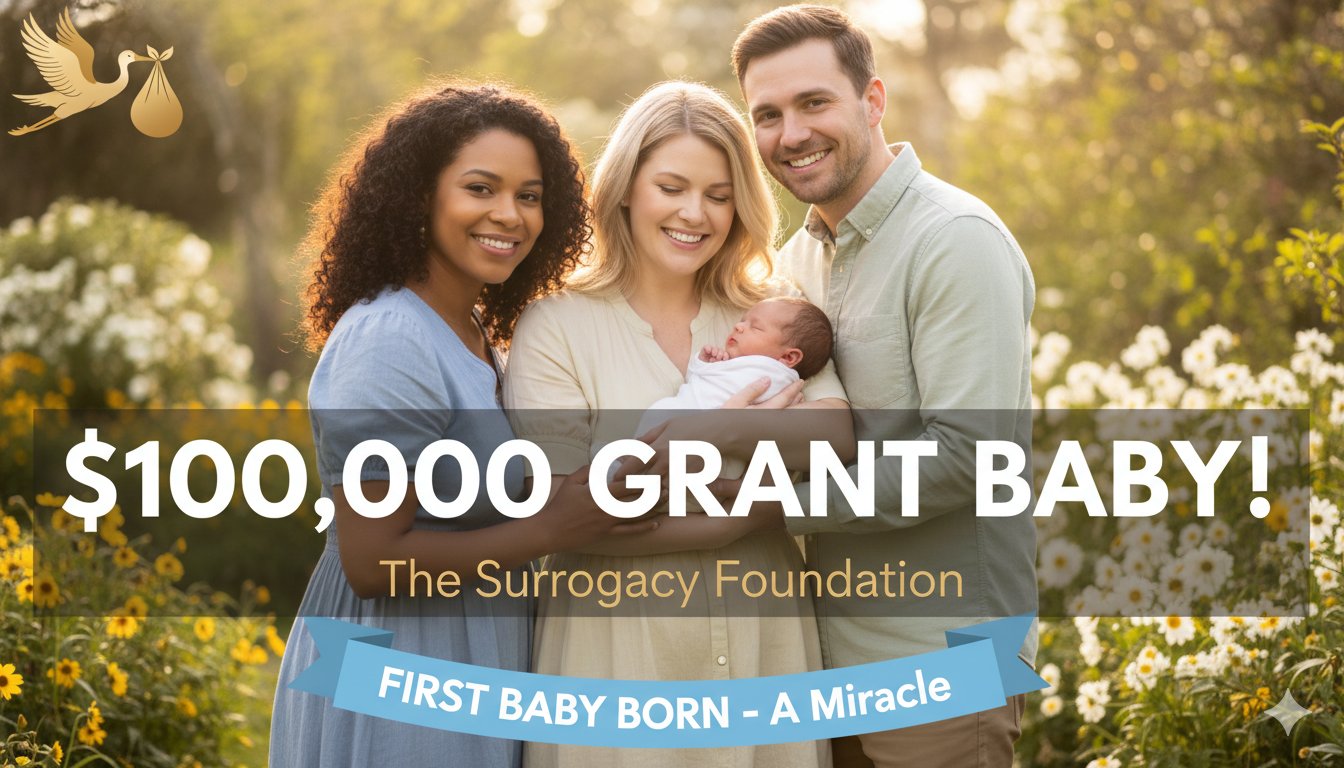
“In a landmark moment for family-building accessibility, The Surrogacy Foundation announces the arrival of baby girl McGill, the inaugural child born with support from its flagship $100,000 grant. Awarded to Georgia couple Shannon and Patrick McGill in late 2024, the funding helped overcome barriers after a traumatic prior delivery, turning a dream of expanding their family into reality through surrogacy with gestational carrier Charlotte Ramberg.”
The Surrogacy Foundation Marks Historic Milestone with First Grant-Funded Birth
The Surrogacy Foundation, an Atlanta-based nonprofit dedicated to broadening access to surrogacy for families across the United States, has reached a pivotal achievement. On February 24, 2026, baby girl McGill entered the world, becoming the first child born through the organization’s competitive $100,000 grant program. This birth underscores the tangible impact of targeted financial support in an industry where surrogacy journeys often carry six-figure price tags, frequently placing them beyond reach for many hopeful parents.
The McGills, residents of Canton, Georgia, faced significant challenges in growing their family after Shannon experienced severe, life-threatening complications during the delivery of their son in May 2022. The ordeal left lasting physical and emotional effects, prompting the couple to explore surrogacy as a path forward. Determined but constrained by costs—surrogacy expenses in the U.S. typically range from $100,000 to $200,000 or more, encompassing agency fees, legal work, medical procedures, surrogate compensation, and related allowances—they applied for The Surrogacy Foundation’s national grant.
After a comprehensive, multi-stage review process that evaluates medical history, financial need, personal narratives, and alignment with the foundation’s mission of inclusive family-building, Shannon and Patrick were selected as recipients of the second $100,000 grant cycle in October 2024. Funds were placed in escrow to cover key surrogacy expenses, allowing the couple flexibility to choose their preferred professionals rather than being locked into specific agency packages.
Gestational carrier Charlotte Ramberg, from nearby Cumming, Georgia, joined the journey, forming a collaborative partnership with the intended parents. The process unfolded with standard milestones: medical screenings, legal agreements, embryo creation and transfer, prenatal care, and ongoing support. The foundation’s grant alleviated substantial financial pressure, enabling focus on health, bonding, and preparation rather than mounting bills.
This success story highlights broader trends in the surrogacy landscape. Demand for gestational surrogacy has grown steadily, driven by factors such as delayed childbearing, same-sex family expansion, single parenting by choice, and medical conditions preventing pregnancy. Yet affordability remains a major hurdle, with average costs continuing to climb due to rising surrogate compensation (often starting around $50,000 plus expenses), insurance complexities, and agency overhead.
The Surrogacy Foundation’s program stands out by offering substantial unrestricted funding—$100,000 per award—positioned in escrow for direct application to journey costs. Unlike smaller grants from other organizations that might cover only partial expenses like IVF cycles or legal fees, this level of support can fund a significant portion of a full surrogacy arrangement. The foundation partners with entities like Hatch to amplify options, including full-journey awards that address nearly all costs in select cases.
To date, the organization has distributed hundreds of thousands in grants, with cumulative awards projected to exceed $500,000 by the end of current cycles. The McGill family’s experience illustrates how such resources create ripple effects: reduced stress for intended parents, stronger support networks, and positive outcomes for surrogates who receive fair compensation and care.
The arrival of baby girl McGill was met with joy from the foundation’s community, including donors, volunteers, and past applicants. Events like the Surrogacy Soiree have helped fuel these initiatives, rallying support and raising awareness about surrogacy as a mainstream family-building option.
As applications for future cycles open periodically—most recently noted for fall periods—the foundation continues to emphasize transparency, ethical practices, and donor impact tracking. Every grant represents not just financial aid but a step toward normalizing diverse paths to parenthood.
Key Details of the Milestone Birth
Recipient Family : Shannon and Patrick McGill, Canton, Georgia (parents of one prior child)
Gestational Carrier : Charlotte Ramberg, Cumming, Georgia
Grant Amount : $100,000 (second national grant awarded in October 2024)
Birth Date : February 24, 2026
Baby : Healthy baby girl McGill
Prior Challenge : Life-threatening complications during son’s birth in May 2022
Broader Impact of Grant-Funded Surrogacy
Programs like this address systemic gaps in reproductive access. Many families turn to crowdfunding, loans, or delayed plans due to costs, while others face geographic or eligibility barriers. By providing sizable, flexible funding, The Surrogacy Foundation empowers more inclusive journeys, fostering families that reflect modern America.
This first grant baby serves as powerful proof of concept, demonstrating that strategic philanthropy can transform lives and expand possibilities in family formation.
Disclaimer: This is a news report based on publicly available information. It is not financial, legal, or medical advice.