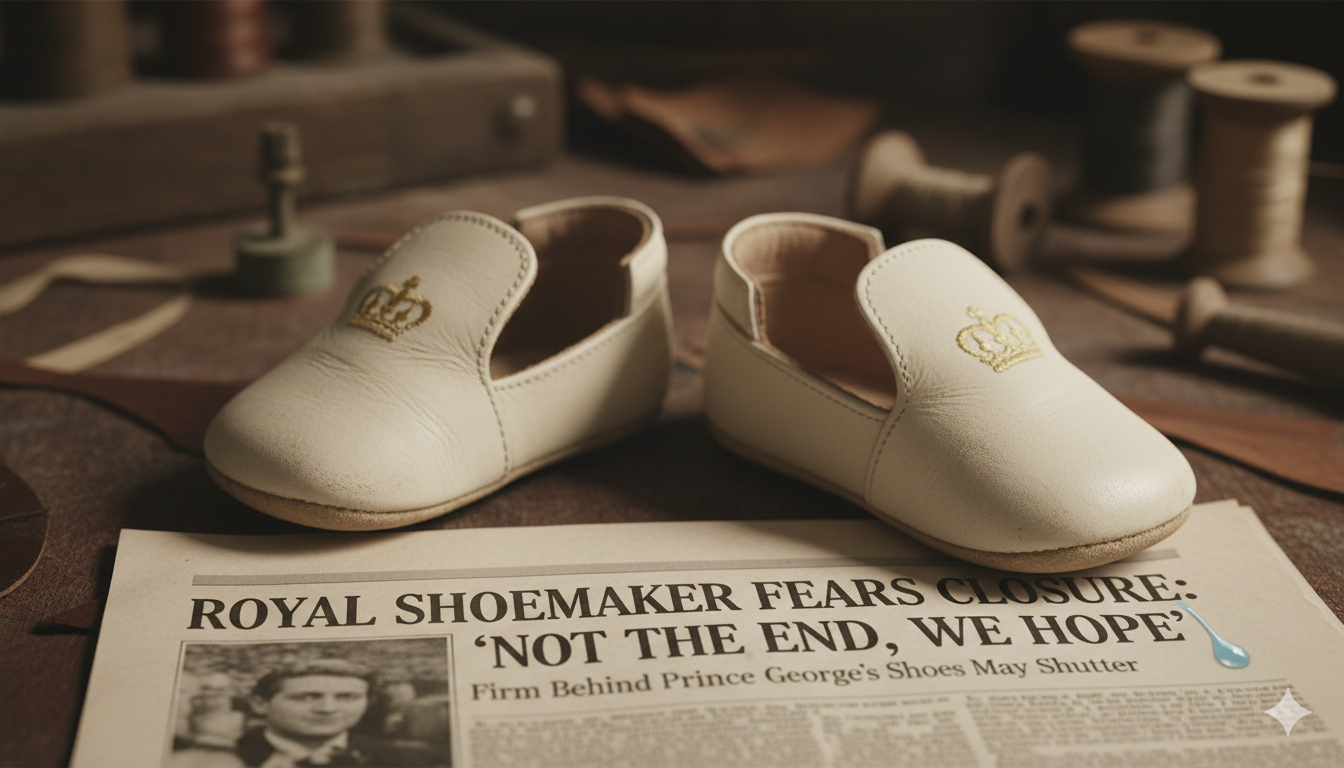
“A 73-year-old Leicester family firm renowned for crafting baby shoes worn by Prince George, Princess Charlotte, and Prince Louis warns of likely closure due to escalating overheads and dwindling demand, underscoring persistent economic strains in the UK retail sector.”
Heritage Brand Under Siege
The Early Days and Baypod shoe company, a staple in British children’s footwear for over seven decades, stands on the precipice of extinction. Founded by the current owner’s father and uncle from their parents’ modest home, the business has evolved into a symbol of quality craftsmanship. At its zenith, the factory buzzed with over 100 employees churning out 10,000 pairs of shoes weekly, supplying retailers across the UK and beyond. Today, that workforce has dwindled to a skeletal crew of just 10, a stark testament to the relentless economic forces battering small manufacturers.
The Royal Boost and Its Aftermath
The company’s fortunes took a dramatic upturn when Prince George was spotted in their soft leather pre-walker shoes during a high-profile royal tour of Australasia. Sales skyrocketed, doubling overnight as the “royal effect” opened doors to new accounts and necessitated overtime shifts to meet surging demand. Similar spikes followed with appearances by Princess Charlotte and Prince Louis in the brand’s designs, cementing Early Days’ reputation as the go-to for premium baby footwear. These premium leather shoes, priced at around $40, represented the pinnacle of the company’s offerings, blending tradition with durability.
However, the post-pandemic landscape has eroded these gains. Orders began tapering off sharply after a peak, with high street retailers citing reduced consumer spending as foot traffic waned. Budget lines, starting at about $16, have also felt the pinch, as families prioritize essentials over discretionary purchases. The owner, Paul Bolton, who runs the operation alongside his brother, has personally subsidized the business to keep it afloat, but the cumulative toll has become unsustainable.
Mounting Cost Pressures
Like many in the UK retail ecosystem, Early Days grapples with a perfect storm of rising expenses. Energy bills have soared, material costs have inflated due to global supply chain disruptions, and mandatory increases in the minimum wage have added layers of financial burden. Employer National Insurance Contributions have further squeezed margins, forcing price adjustments that risk alienating price-sensitive customers. Bolton has openly lamented being “hit from all angles,” with overheads climbing while revenues plummet.
This mirrors broader trends in the UK retail sector, where cautious consumer behavior persists amid geopolitical uncertainties and lingering inflationary pressures. Retailers report that shoppers are increasingly scrutinizing value, hunting for deals via digital tools, and cutting back on non-essentials. The hospitality and retail industries face dual tax hikes, including business rates reforms that could elevate bills despite some relief measures. Wage increases, while beneficial for workers, amplify employment costs for employers already navigating thin margins.
Strategic Responses and Market Realities
In response, Early Days has explored diversification, but the core baby shoe market remains niche and vulnerable. The shift toward online sales has helped some competitors, yet for a traditional manufacturer reliant on wholesale partnerships, adapting to omnichannel demands requires capital that’s in short supply. Bolton’s recent LinkedIn announcement signaled a potential wind-down, inviting inquiries from prospective buyers. While some interest has emerged, including possibilities of keeping operations in the UK, others hint at overseas relocation—a move the family staunchly opposes to preserve the brand’s British heritage.
Analysts point to a polarized market: discount formats and affordable luxury segments like health and wellness thrive, but mid-tier heritage brands struggle. Private equity interest in resilient sub-sectors such as pet care or athleisure hasn’t extended to children’s footwear, where circular economy trends favor resale over new purchases. The company’s plea for a savior underscores a wider call for policy support, though government responses emphasize economic stability and job creation without specific bailouts.
Key Financial Indicators
To illustrate the sector’s headwinds, consider these aggregated insights from UK retail reports:
| Challenge | Impact on Retailers | Example in Footwear Sector |
|---|---|---|
| Wage Increases | Higher labor costs, up 5-10% annually | Forces overtime reductions and staff cuts |
| Energy and Materials Inflation | Overhead surges of 15-20% | Material prices for leather and synthetics rise, compressing margins |
| Consumer Confidence Dip | Sales volume decline of 2-5% | Shift to budget options or deferred purchases |
| Tax Reforms | Increased bills by 3-7% | Business rates hikes despite some multipliers |
| Supply Chain Disruptions | Delivery delays and cost spikes | Geopolitical tensions affect imports, raising landed costs |
These figures highlight how even established players like Early Days face compounded risks, with market growth insufficient to offset cost escalations.
Broader Economic Implications
The potential shuttering of Early Days isn’t isolated; it reflects systemic issues plaguing UK manufacturing and retail. Small family firms, once the backbone of local economies, are ceding ground to global giants capable of absorbing shocks through scale. In Leicester, a hub for textiles and footwear, such closures exacerbate unemployment and erode industrial heritage. For US observers, this echoes domestic retail bankruptcies, where inflation and e-commerce dominance have felled icons. Investors eyeing transatlantic opportunities might note the undervalued assets in distressed UK sectors, but turnaround requires navigating Brexit legacies and EU trade frictions.
Bolton’s candid assessment pegs the closure likelihood at 80%, yet he clings to hope: inquiries could yield a lifeline. The brothers’ reluctance to offshore production speaks to a deeper commitment to quality and locality, values increasingly rare in a cost-driven world. As the firm weighs its options, it serves as a cautionary tale for heritage brands worldwide—adapt or fade.
Path Forward Amid Uncertainty
Prospective buyers must contend with a market favoring agility over tradition. Sustainability mandates, like extended producer responsibility fees, add another layer of compliance costs. Retailers pivoting to eco-friendly materials or digital-first models fare better, but for a 73-year-old operation, such transformations demand investment. Government initiatives for skills levies and employment rights reforms aim to bolster workforce resilience, yet immediate relief for cash-strapped firms remains elusive.
In the children’s footwear niche, competition from fast-fashion imports intensifies, undercutting prices while compromising quality. Early Days’ premium positioning, bolstered by royal endorsements, offers a unique selling point, but sustaining it requires marketing muscle absent in a lean setup. Bolton’s outreach signals openness to partnerships, perhaps mergers with larger entities that could integrate the brand into broader portfolios.
Sector-Wide Resilience Strategies
Drawing from industry playbooks, survival hinges on:
Cost Optimization : Streamlining supply chains and adopting energy-efficient technologies to curb overheads.
Consumer Engagement : Leveraging social media and AI for personalized marketing, tapping into nostalgic appeal.
Diversification : Expanding into adjacent categories like toddler accessories or eco-lines to broaden revenue streams.
Policy Advocacy : Joining trade associations to push for targeted relief, such as tax incentives for domestic manufacturing.
These tactics, if implemented, could avert closure, but time is of the essence for Early Days.
Disclaimer: This news report provides informational tips drawn from various sources without specifying them.